


Why UK county data is outdated and what to do about it
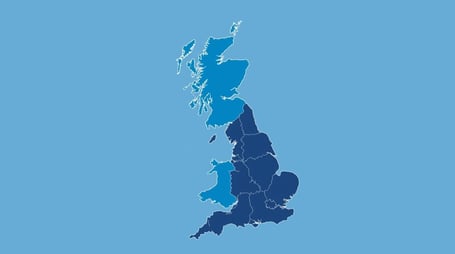
County fields appear on address forms across the UK, yet for most modern systems, they serve very little value. This is because they haven’t been actively maintained for nearly 30 years.
A Brief History of UK Counties
To understand why county data is unreliable today, it helps to look at how counties have changed over time.
The UK has gone through several administrative reorganisations, most notably in 1974 and again in the 1990s. These changes created new counties, dissolved others, and left behind a mix of different county types that still cause confusion today.
There are broadly three types of county in use across different systems and datasets:
-
Ceremonial counties are used for formal and civic purposes, such as the appointment of Lord Lieutenants. There are 48 in England.
-
Administrative counties are used by local government for planning and public services. These have changed significantly over the decades.
-
Postal counties were used by Royal Mail to help sort and deliver mail before postcodes were introduced. These are the counties most likely to appear in address databases.
The problem is that these three types don't always align, and people's personal sense of which county they live in often reflects a mix of all three, shaped by where they grew up, education, and personal experience.
Royal Mail Stopped Updating County Data in 1997
Royal Mail's Postcode Address File (PAF) is widely regarded as the most authoritative source of address data in the UK. It supports address lookup tools, delivery systems, and business databases.
However, Royal Mail stopped actively updating county data in 1997.
Once the postcode system matured, counties were no longer needed to identify or route mail. A postcode already provides the information required to locate a premises accurately. County became a redundant field, and the data has gradually become less reliable and less relevant.
Why County Data Varies So Much
Because there is no single governing body responsible for county data, what appears in one system often differs from another. This is not only a data quality issue, it is also a question of interpretation.
Ask someone in Stockport which county they live in and you may hear Cheshire, Greater Manchester, or simply Stockport. Each answer reflects a valid historical, administrative, or personal perspective, but none of them is definitively correct in every context.
This makes county data uniquely difficult to validate. Unlike a postcode, which follows a defined structure and can be verified against an authoritative source, a county value is often subjective.
Our Recommendation
County data does not help identify a premises. In modern address systems, that role is performed far more accurately by the postcode. We generally recommend not using county data, and where possible, removing it as a field in your forms or workflows.
If your system still needs a county field for operational reasons, it is usually better to let users manually enter the county they associate with their address. This has no impact on the accuracy of the premises record, but it can reduce user friction and avoid unnecessary validation failures.
What To Do If County Data Needs to be Changed
If you would like to update the county associated with an address, Royal Mail provides a process for reporting address issues through this form.