


Why data quality matters with the new single sanctions list

On 28 January 2026, the UK government made a significant change to how sanctions information is published. The Office of Financial Sanctions Implementation (OFSI) Consolidated List of Asset Freeze Targets closed, and the UK Sanctions List became the single official source of all UK sanctions designations. For commercial insurance businesses, this change has prompted a wider review of screening processes, data feeds, and customer information.
What changed on 28 January 2026
Until that date, the UK maintained two overlapping lists. The UK Sanctions List, published by the Foreign Office, covered all sanctions designations across financial, trade, transport, and immigration measures. The OFSI Consolidated List, published by HM Treasury, covered financial sanctions only and was effectively a subset of the wider list.
This split created complications. Many firms screened against the OFSI list because financial sanctions felt most directly relevant, but doing so meant they were not seeing non-financial designations such as trade or transport restrictions. The two lists used different identifiers, were maintained separately, and sometimes diverged in formatting and timing.
The UK Sanctions List then became the only official source of UK sanctions designations, and the OFSI Consolidated List and its search tool stopped being updated. The reasons for the change include reducing duplication, removing the risk of firms missing non-financial designations, and simplifying the integration work that screening vendors must do.
Why commercial insurance is more exposed
Commercial insurance tends to be more exposed to sanctions screening than retail because a single commercial placement can involve many more parties.
For a personal motor policy, the screening universe is typically one named driver. For a personal home policy, it is one or two named insureds. The number of names to check is small, the data is usually clean, and the matching question is relatively simple.
In commercial placement, a single contract might involve:
-
The named insured, which is usually a corporate entity rather than a person
-
Parent companies, subsidiaries, and joint ventures where the policy extends to group entities
-
Beneficial owners of the corporate structure
-
Co-insureds and additional insureds listed on the schedule
-
Loss payees who have an interest in the policy proceeds
-
For marine and aviation cover, the registered owner, operator, and charterer of the asset
-
Cargo owners, consignees, and counterparties along a trade flow
-
Third-party claimants in liability matters
-
Loss adjusters, repair networks, and suppliers receiving claim payments
Each of those parties is in scope for sanctions screening. A commercial broker placing a complex risk may need to screen dozens of names connected to a single policy, often spread across multiple jurisdictions and recorded in formats that vary between systems.
Where address data fits in
Screening systems compare customer and counterparty records against the entries on the UK Sanctions List, looking for matches across fields including name, date of birth, company number, and address. The quality of that comparison depends on the data on both sides. The list is curated by the government. The firm's own records are its own responsibility, and that is where data quality work tends to pay off.
Address data is one of several fields screening systems use, and it plays an important role in three situations relevant to commercial insurance.
-
Disambiguating names: A customer record with a common name will produce partial matches against multiple entries on global sanctions lists. Date of birth and nationality help narrow the field, and address is one of the additional signals used to decide whether the match is the same person. When address data is missing, malformed, or inconsistently recorded, the system has less to work with, which pushes borderline cases into manual review and slows everything down.
-
Identifying companies: UK companies are routinely matched on registered office address alongside company name and number. Sanctions designations of corporate targets often record the entity's registered address in its home country, and that address is one of the more reliable identifiers when company names overlap or when an entity operates under several trading names.
-
Beneficial ownership tracing: Complex commercial structures sometimes involve shell entities registered at addresses connected to designated persons. Multiple entities may share a registered address, and is one of the signals compliance teams use when looking at corporate structures. Clean, consistent address data makes those patterns easier to see.
Address data does not solve sanctions compliance on its own. Names, dates of birth, company numbers, ownership data, and the screening logic itself all matter, and each requires its own attention. Clean address data reduces one common source of gaps, which makes the rest of the screening process work better.
Considerations for commercial insurance

The consolidation is a useful prompt for commercial insurance teams to revisit the data foundations of their screening. Treating customer and counterparty data as a continuous quality concern is important. Sanctions designations can be added to any party at any time, which means a customer who was clean at onboarding may become a positive match later. Periodic cleansing of existing records helps keep the screening base in a state where new matches are caught quickly.
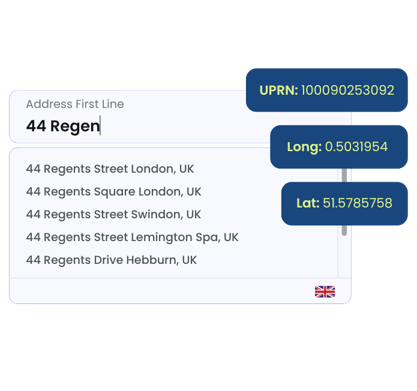
Validating address data at the point of capture, so that records entering the system are structured and complete, reduces noise downstream. Free-text address fields tend to degrade over time, particularly when records are migrated between systems or when data is entered manually under time pressure.
Understanding what the screening vendor does is also vital. Firms that rely on third-party screening providers benefit from knowing what data their vendor uses, how it handles address matching, and how it has adjusted to the consolidation. The Skadden briefing on the change makes this point directly for any firm using specialist screeners.
Maintaining a clear audit trail of how alerts were reviewed and resolved matters for both regulatory inspection and internal quality control. The audit trail is built on the data in the underlying records, so the cleaner those records are, the more straightforward the trail becomes.
For commercial insurance teams handling complex placements with long counterparty chains, validated customer and counterparty data makes screening systems work better. It reduces false positives, narrows the gap where missed matches occur, and supports the audit trail that regulators and internal compliance functions require.
At Ideal Postcodes, we work with insurance teams to improve the quality of address data across customer records. Get in touch if clean address data is part of the foundation you are looking to strengthen.